> For the complete documentation index, see [llms.txt](https://help.glpi-project.org/llms.txt). Markdown versions of documentation pages are available by appending `.md` to page URLs; this page is available as [Markdown](https://help.glpi-project.org/documentation/modules/assistance/service-catalog.md).
# Service Catalog
### Introduction
The Service Catalog in GLPI 11.0 represents a major redesign of the self-service interface, providing end users with a modern and intuitive experience to access IT services. This new version introduces an advanced categorization system, visual illustrations, and intelligent search capabilities.
#### Service Catalog Objectives
* **Simplify service access**: Modern and intuitive interface;
* **Enhance user experience**: Category-based navigation with illustrations;
* **Facilitate search**: Advanced fuzzy search and smart filters;
* **Organize services**: Hierarchical category system;
* **Customize display**: Rich illustrations and descriptions;
### Service Catalog Configuration
#### Enabling the Service Catalog
**Step 1: Global Configuration**
1. Log in with an administrator account;
2. Navigate to **`Administration` > `Entities`**;
3. Select the root entity or target entity;
4. Access the **Helpdesk home** tab;

**Step 2: Catalog Settings**
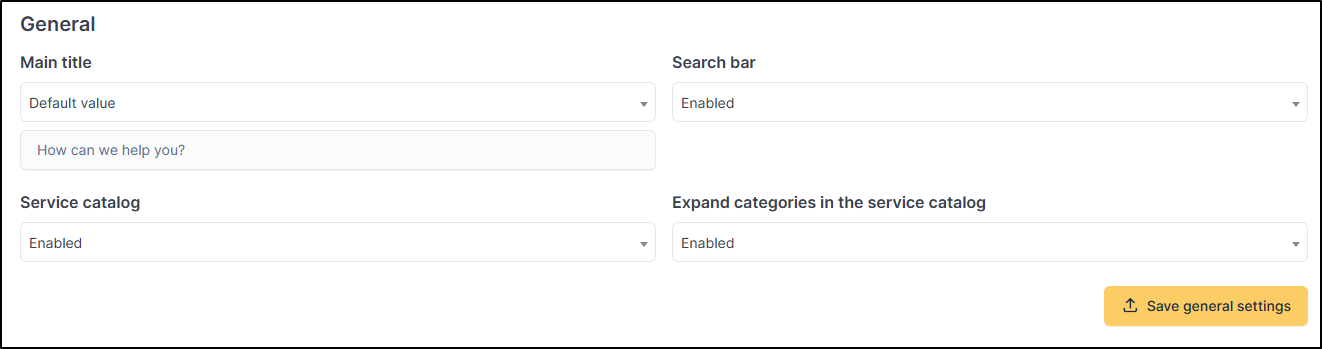
The configuration options available are:
**Search bar**:
* **Options**: Enabled/Disabled;
* **For child entities**: additional "**Inherited from parent entity**" option;
**Service catalog**:
* **Options**: Enabled/Disabled
* **For child entities**: additional "**Inherited from parent entity**" option
**Expand categories in the service catalog**:
* **Options**: Enabled/Disabled
* **For child entities**: additional "**Inherited from parent entity**" option
Service catalog configuration options (Bottom of Administration > Entities > Helpdesk home Tab)
**Step 3: Save Configuration**
Click the **"Save general settings"** button to apply the changes.
***
### Categories Management
#### Creating Categories
**Step 1: Access to Category Management**
1. Navigate to **`Administration` > `Forms` > `Service catalog categories`**
2. Click **Add** to create a new category

**Step 2: Category Configuration**
| Field | Description | Required |
| ---------------- | ----------------------------- | -------- |
| **Name** | Name displayed in the catalog | ✅ Yes |
| **Description** | Rich description (HTML) | ❌ No |
| **Illustration** | Representative image | ❌ No |
| **Category** | Parent hierarchy (optional) | ❌ No |

**Step 3: Visual Settings**
**Illustration**:
* Supported formats: PNG, JPG;
* Recommended size: 400x300px;
* Default illustration if not specified;
**Rich description**:
* Limited HTML support (no images)
#### Hierarchical Organization
**Recommended structure**:
```
📁 IT Services
├── 📁 Hardware
│ ├── 📋 Computer request
│ └── 📋 Accessory request
├── 📁 Software
│ ├── 📋 Software installation
│ └── 📋 Software license
└── 📁 Support
├── 📋 Technical assistance
└── 📋 Training
```
**Best practices**:
* Maximum 3 levels depth
* Short and explicit names
* Consistent illustrations by theme
* Clear and concise descriptions
***
### Forms Configuration
#### Adding a Form to the Catalog
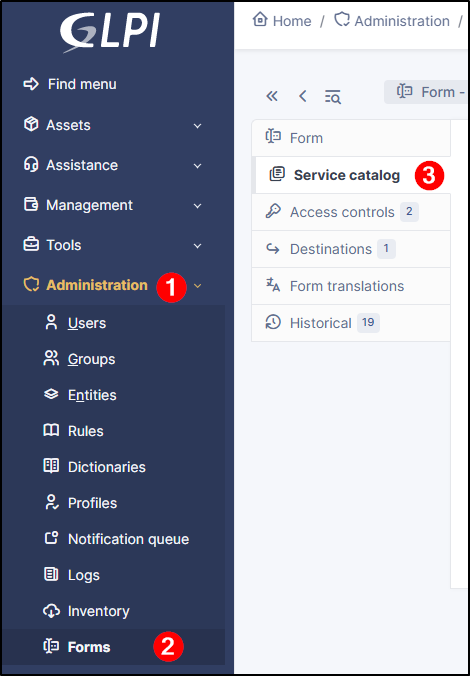
**Step 1: Form Creation/Edition**
1. Navigate to **`Administration` > `Forms`**
2. Create a new form or edit an existing one
3. Access the **Service catalog** tab
**Step 2: Catalog Configuration**
**Catalog Information**:
| Field | Description | Usage |
| ---------------- | --------------------- | ------------------------------- |
| **Description** | Rich HTML description | Displayed in service card |
| **Illustration** | Service image | Card visual (400x300px) |
| **Category** | Associated category | Hierarchical organization |
| **Pin to top** | Priority service | Displayed first, non-filterable |

**Step 3: Advanced Metadata**
**Optimized description**:
* Use rich editor for formatting
* Avoid images (not supported)
* Keep concise (3-4 lines max)
* Include keywords for search
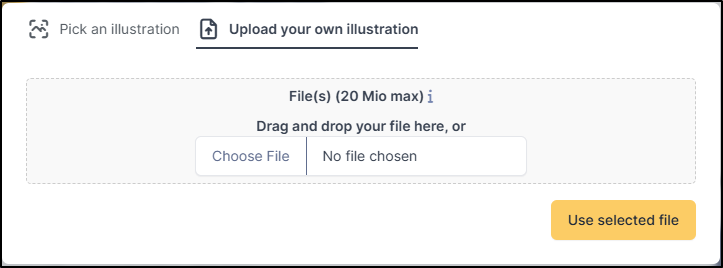
**Custom illustration**:
* Integrated illustration selector
* Default icon library
* Custom image upload
Upload your illustration
#### Access Rights Management
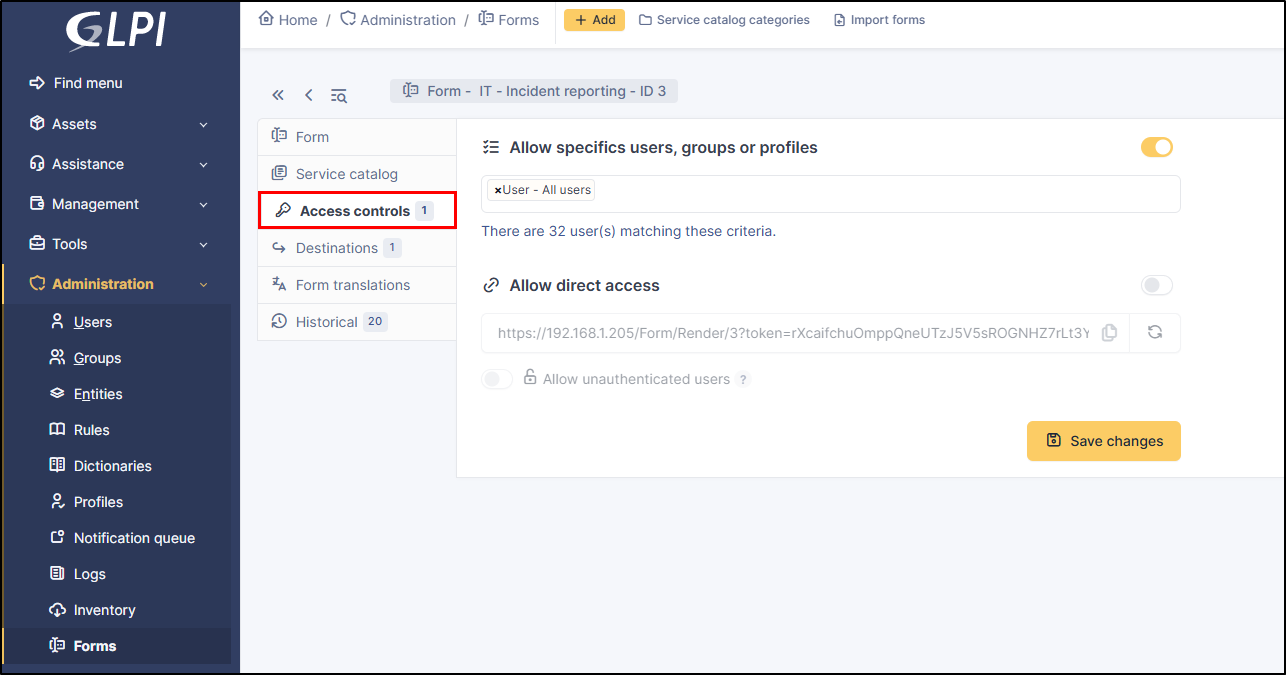
**Form Access Control**:
* Uses GLPI access control system
* Checks logged-in user rights
* Automatically filters inaccessible forms
* Supports entities and recursivity
**Rights Configuration**:
1. Access the form's **Access control** tab
2. Define access criteria (profiles, entities, etc.)
3. Test with different user accounts
***
### User Experience
#### Catalog Navigation
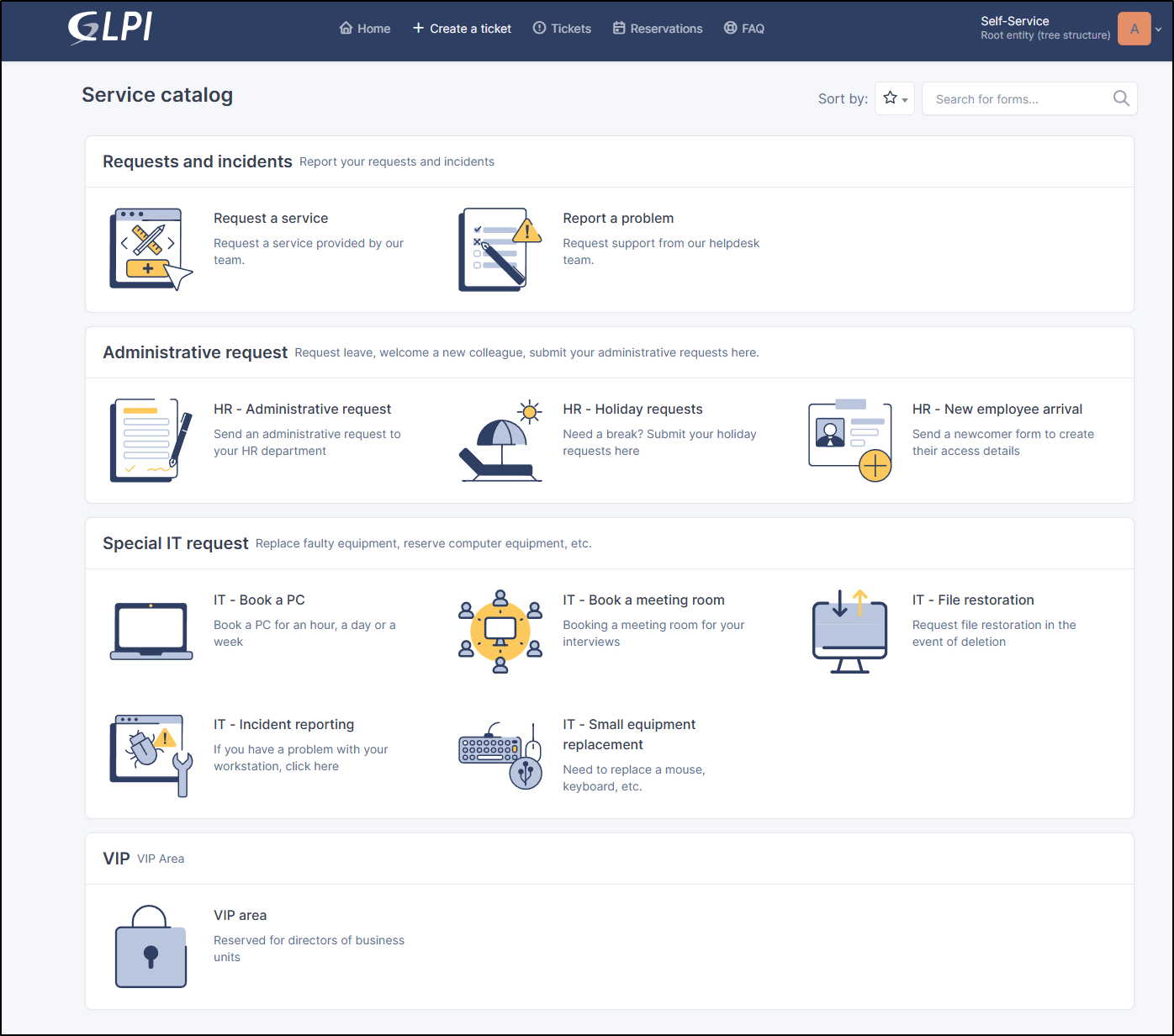
**Catalog Access**
1. Log in to the GLPI user interface
2. Navigate directly to `/ServiceCatalog` or access via the `+ Create a ticket` button

Service catalog homepage
#### Search Features
**Search bar**:
* **Fuzzy search**: Typo tolerance
* **Real-time search**: Instant filtering
* **Search fields**: Service name and description
* **Pinned services**: Always visible, non-filtered
**Search examples**:
* `computr` → finds "Computer request"
* `install` → finds "Software installation"
* `hardware` → finds all services in "Hardware" category
#### Sort Options
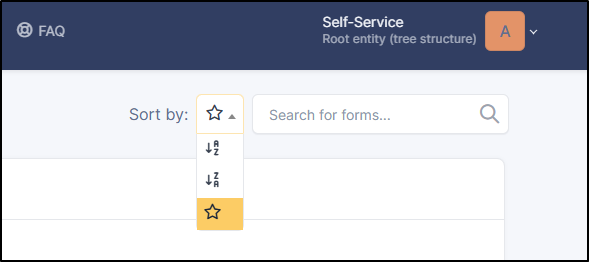
**Available strategies**:
| Icon | Strategy | Description |
| ---- | -------------------- | --------------- |
| 🔤 | Alphabetical | A → Z by name |
| 🔤↓ | Reverse alphabetical | Z → A by name |
| ⭐ | Popularity | Most used first |
**Popularity sort**:
* Based on usage count;
* Highlights popular services;
* Useful for identifying recurring needs;
### Advanced Features
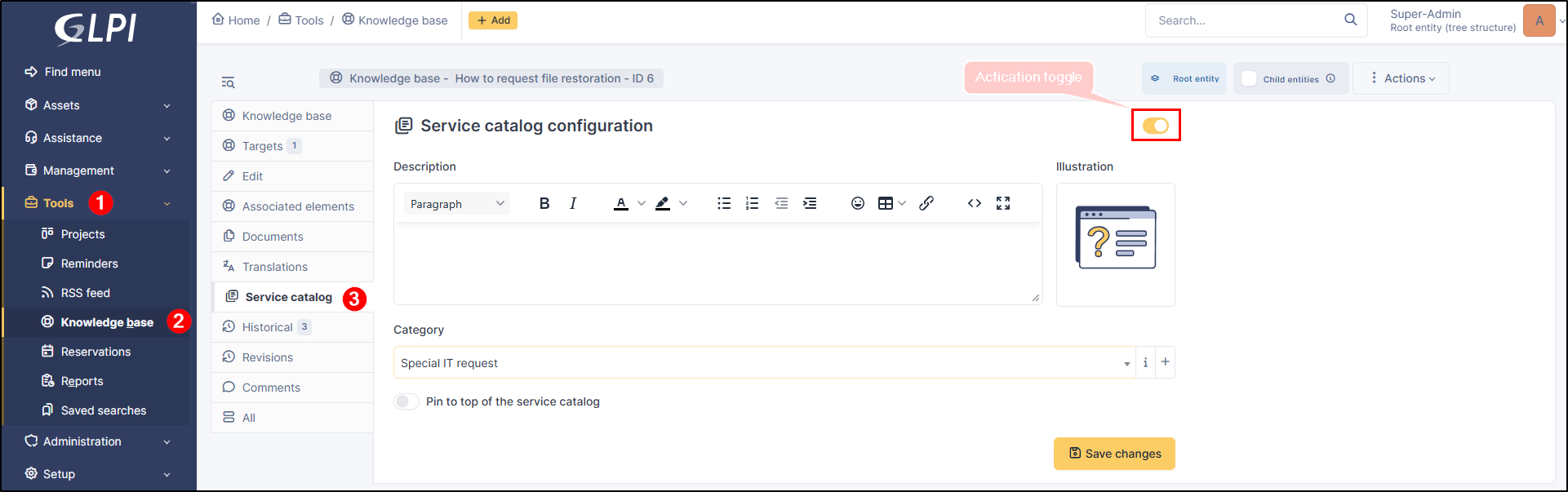
#### Knowledge Base Integration
**Automatic display**:
* Knowledge base articles integrated in catalog
* User access rights filtering
* Unified search (forms + articles)
**Configuration**:
1. Edit the concerned knowledge base;
2. **Service catalog** tab;
3. Check activation toggle ☑️;
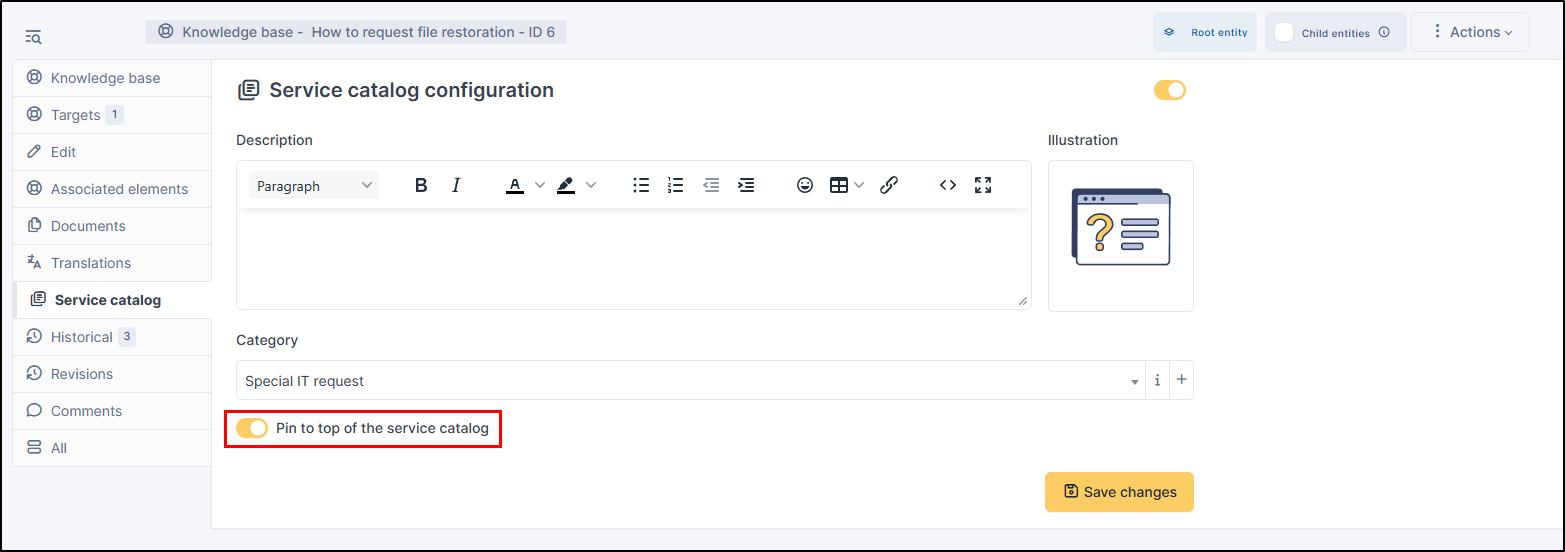
### Pinned Services
**Feature**:
* Priority services always visible;
* Not affected by search filters;
* Positioned first in display;
**Configuration**:
1. Edit the concerned form;
2. **Service catalog** tab;
3. Check **Pin to top** ☑️;
***
### Administration and Rights
#### Required Rights
**Administrator**:
* **Entities**: Service catalog configuration per entity;
* **Forms**: Form creation and management;
* **Categories**: Category hierarchy management;
**Service Manager**:
* **Forms**: Service catalog metadata modification;
* **Categories**: Creation within entity scope;
**End User**:
* **Assistance**: Read-only service catalog access;
* **Forms**: Form submission according to access rights.
\
---
# Agent Instructions
This documentation is published with GitBook. GitBook is the documentation platform designed so that both humans and AI agents can read, navigate, and reason over technical content effectively. Learn more at gitbook.com.
## Querying This Documentation
If you need additional information that is not directly available in this page, you can query the documentation dynamically by asking a question.
Perform an HTTP GET request on the current page URL with the `ask` query parameter, and the optional `goal` query parameter:
```
GET https://help.glpi-project.org/documentation/modules/assistance/service-catalog.md?ask=&goal=
```
`ask` is the immediate question: it should be specific, self-contained, and written in natural language.
`goal` is optional and describes the broader end goal you are ultimately trying to accomplish on behalf of the user. GitBook uses it to tailor the answer towards what is most useful for that goal.
The response will contain a direct answer to the question and relevant excerpts and sources from the documentation.
Use this mechanism when the answer is not explicitly present in the current page, you need clarification or additional context, or you want to retrieve related documentation sections.